The New Standard
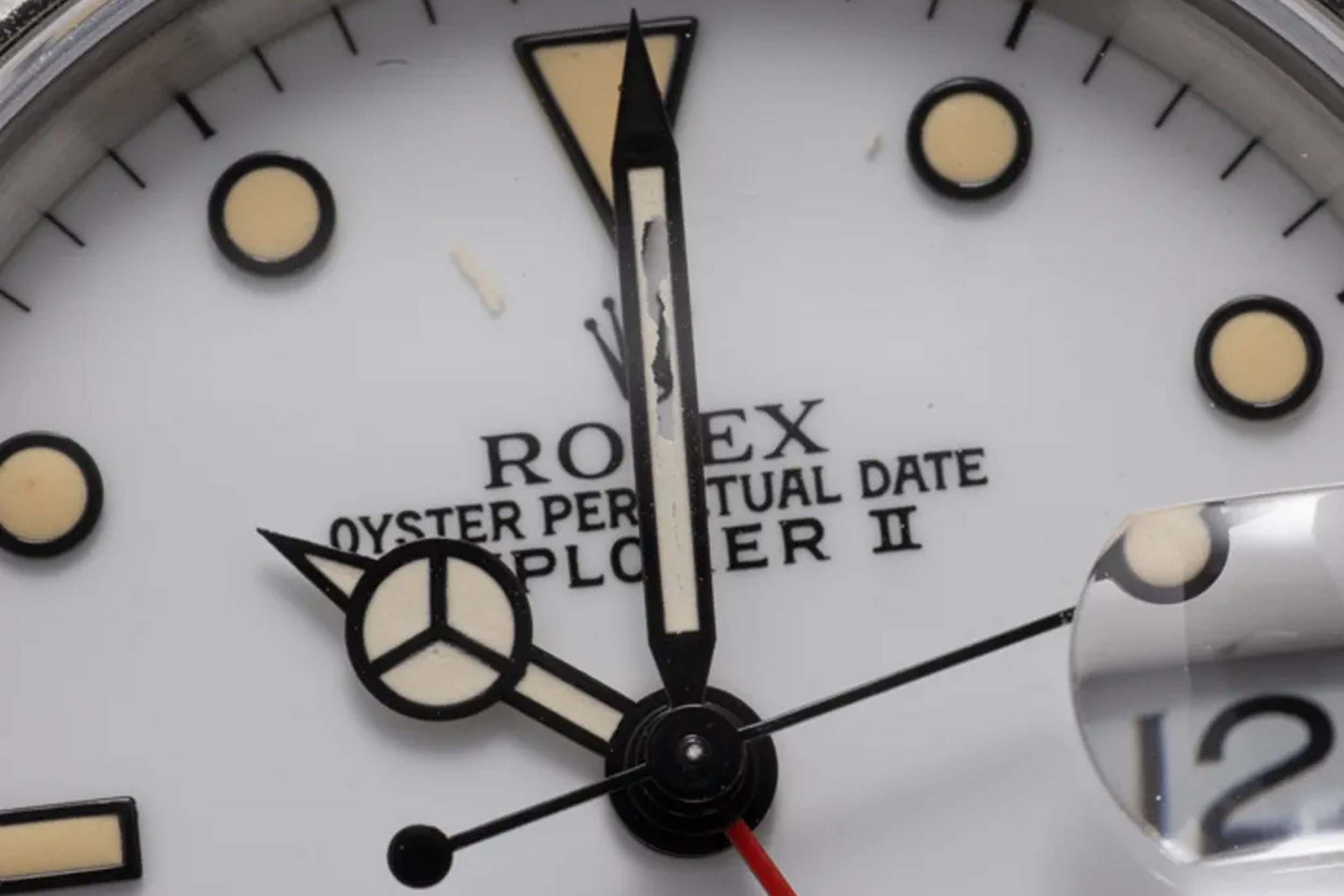
There is a responsibility that comes with holding someone else’s future watch in your hands. A responsibility to see clearly. A responsibility to speak honestly. A responsibility to disclose what you know. I was reminded of this recently during a deal where I asked the most important question any buyer can ask:
“Is there anything I should be made aware of?”
A simple question. Clear. Direct. An open invitation to be transparent. In a market like ours, withholding material information is not a neutral act. When you are the one holding the watch and acting as the eyes for someone else, completeness is not a courtesy. It is the job.
Yet too many transactions still play out another way. Sellers focus on the quick close. People play dumb when it helps a deal go through. Issues stay unmentioned unless they are caught. And there is a quiet hope that the other person will not notice what was left unsaid. If you are the one holding the watch, you know more than the person looking at a JPEG. You see the true condition. You feel what the images cannot show. Pretending otherwise is not transparency. It is a way of shifting risk.
At a certain level, most sellers know better. They understand how condition drives value, how nuance shapes desirability, and how omissions shift risk. The problem is not lack of knowledge. The problem is lack of accountability. When a dealer is willing to overlook something even in a conversation with another dealer, it reveals the gaps in the system. If that is the standard among peers, the average collector is operating at an even greater disadvantage. That is how trust dies. That is how people exit the hobby. That is how the market slowly cannibalizes itself.
I am doing this because I genuinely love the watch world. I love the history, the stories these pieces carry, the hunt, the collectors, the dealers, and the conversations that bring all of us together. And when you care about something this much, you feel responsible for helping build the version of it that should exist. This industry deserves better. The real question is what better looks like, and who gets to define it?
During a recent Q and A, someone asked me what the single greatest value add is for a collector. My answer was simple. Confidence. Confidence in the watch. Confidence in the seller. Confidence in the process. Nearly every problem in this market traces back to the absence of that feeling.
The situation I described is a good example. These dynamics unfold because there are very few structural safeguards to prevent them. We leave too much to chance, too much to trust, and too many expectations to unwritten norms. As we build Collected, this is the gap we think about constantly. But I do not believe the answers should come from one platform or one person. They should come from the community that lives with the consequences.
This is an invitation for that conversation.
What do we owe each other?
Here is the principle I keep returning to: if you are selling a watch, you have a duty to disclose anything that materially impacts value. If it affects originality, condition, function, service cost, or desirability, it should be disclosed. Not hinted at. Not avoided. Not left for the buyer to uncover later.
And here is something we do not talk about enough: when dealers know they will need to disclose, they source better. They avoid marginal pieces. They ask deeper questions. They interrogate condition with more seriousness. They pass on watches that only make sense in a world where nothing needs to be said out loud.
Disclosure does not only protect buyers. It disciplines sourcing. It raises the floor of the entire market. It makes risks more visible and prices more honest. The whole ecosystem becomes more informed because everyone is operating with clearer information.
That feels obvious to me, but I know that “materially affecting value” can mean different things to different people. So I want to put a few questions back to the community.
Where do you believe that line sits in practice?
What do you think a seller is obligated to call out even if the buyer does not ask?
Are we comfortable with ‘buyer beware’ as the default, or should the burden sit more heavily with the person who has the watch in hand?
The question “Is there anything I should be made aware of” is, in my view, the simplest test of integrity in this market. How we answer it says a lot about what kind of industry we want to be part of.
Beyond authentication
There is a widespread belief that authentication protects the buyer. To be fair, it does, but only partially. Authentication confirms that a watch is real. It does not confirm that the watch is correct. And in vintage, that distinction can mean a massive difference in value.
A watch can be authentic and still be problematic. A dial can be later than the case. Components can be service replacements. Lume can be damaged or unstable. Condition can be misaligned with price. Authentication catches none of this. This is where many buyers, especially newer ones, find themselves exposed. They trust the verified authentic stamp as if it guarantees the integrity of the watch. It does not. It only guarantees identity.
Here is the deeper issue I want the community to consider. When a platform inserts itself into a transaction and positions authentication as the answer, is it solving the right problem, or is it unintentionally removing the people who understand nuance the best?
Dealers, for all their flaws, are subject matter experts. They know how to read originality. They know how to interpret condition. They know what affects value. They understand what collectors care about long term. Remove that expertise from the transaction and you remove the only mechanism the market has ever had for evaluating nuance.
And when authentication becomes the main selling point, a predictable dynamic emerges. Platforms become safe landing zones for inventory a dealer would not put their own name behind. If a watch is technically authentic but materially compromised, the platform, not the dealer, absorbs the reputational cost.
So I want to put a few questions back to you.
For collectors:
Does verified authentic actually give you the confidence you want?
What kind of information would meaningfully change how you evaluate a watch?
For dealers:
What do you see as your responsibility beyond confirming authenticity?
If a platform does not require disclosure, does it make you more transparent, or does it become a place where difficult pieces can be listed without scrutiny?
Here is how I frame it in my own mind: authentication answers the question “Is it real.” Disclosure answers the question “Is it right.” Those are not the same thing, and they should never be confused.
This brings up a few bigger questions for all of us.
Should platforms play a role in raising the bar?
Should dealers remain central to evaluating nuance?
Should the market expect more than authentic but unknown?
I do not believe this conversation should be led by platforms. It should be shaped by the people who live the consequences.
Why dealers still matter
If disclosure is the backbone of trust, then the people who understand the truth of a watch are essential to the integrity of the market. A good dealer does more than list inventory. A good dealer interprets reality. They know how to evaluate condition, originality, nuance, and risk. They know which details matter and which do not. They know what questions to ask, including the ones a collector may not know to ask.
Even the most experienced dealers miss things. No one can perfectly evaluate every watch every time. The point is not perfection. The point is structure, a system that reduces error, removes ambiguity, and makes omissions harder whether intentional or not.
Dealers shape expectations. They set the tone for transparency. They influence the standards the rest of the market follows. And when a dealer represents a collector, their expertise becomes a form of protection, a counterweight to the asymmetry in knowledge that defines this market.
So I want to ask the dealer community something simple:
How do you see your duty to disclose in your real day-to-day operations?
What would make you feel supported, not exposed, in operating at a higher standard?
And to collectors:
What do you genuinely expect from a dealer today?
And when you step back, is that expectation being met?
What the system is rewarding
One of the clearest lessons I have learned is that shortcuts are not limited to inexperienced sellers. Even respected people with influence can fall into the same behavior when the incentives reward it. This is partly about character, but the deeper issue is structure. When incentives reward the quick close, even good actors can justify shortcuts. Structure shapes behavior. Without it, character alone is being asked to carry more weight than it realistically can in a commercial environment. If a market allows omissions to go unchallenged, omissions will occur. Not because people are bad, but because the system does not reward anything different.
There is another dynamic in the market that deserves a clear look. When a watch turns out to be incorrect or misrepresented, a dealer can simply say they did not know. It has become the universal defense. And because the system asks nothing of them, that explanation is often enough to end the conversation. The problem is not just that this happens. The problem is that the structure of the market makes it impossible to tell the difference between a mistake, a shortcut, and a strategy. In a world with no required disclosures, plausible deniability becomes indistinguishable from integrity. This is not about pointing fingers. It is about acknowledging a reality. If the system rewards “I didn’t know,” then looking the other way becomes an incentive, not an exception.
There is also the quiet truth that many in the community will look the other way when something is off, simply because they want continued access. Access to inventory. Access to relationships. Access to opportunities. In a market without structure, silence becomes its own incentive. The cost of speaking up often feels higher than the cost of staying quiet.
So I want to put a few deeper questions on the table.
What behaviors does the current system actually reward?
Where do you feel pressure to cut corners or stay silent?
When have you seen transparency create friction instead of trust?
What would need to change for full disclosure to feel like an advantage rather than a risk?
For decades, the watch market has operated on unwritten rules. Everyone knows them, but no one documents them. And when expectations live only in culture and not in structure, they erode. The market has grown too quickly. The stakes have risen too high. The gray areas have become too wide. It may be time to write down the rules we all quietly claim to follow.
What does better look like?
Trust is not a system. Handshake ethics only worked when the market was small enough for their flaws to stay hidden. They were never a reliable foundation for a global market. Today that same approach has normalized omission and built a culture of excuses.
Inside Collected, we have been experimenting with structure.
Every deal includes a disclosures section written by the seller, and we ask for movement performance so buyers have a basic sense of how the watch is behaving. It is not a full condition report. It is a starting point. The idea is simple. Create enough structure that honesty becomes easier and omissions become harder.
But this raises a bigger question for the community.
Should we move toward a more standardized disclosure framework?
Should certain elements be required in every transaction?
Should we evolve past open text disclosures into something more consistent across sellers, brands, and eras?
I do not believe our version should be the final word. I see it as a prototype, a first step in understanding what a better system might look like.
So I want to ask you:
If you could define the duty to disclose from scratch, what would it include?
How detailed should it be?
Where should the line sit between what a platform enforces and what a relationship relies on?
What would make buyers feel safer and still allow sellers to operate comfortably?
This is the conversation worth having.
Shaping the future together
I believe the watch world is moving toward a more transparent era. Information is spreading faster. Expertise is moving from the few to the many. The center of gravity is shifting away from gatekeepers and toward the community. And with AI accelerating, the truth will soon be impossible to hide.
Condition reporting will become standardized. Authentication will become the beginning rather than the end. Sellers will be expected to stand behind what they know. Buyers will expect clarity, not narratives. Dealers will act as educators as much as suppliers. Platforms will be judged by the standards they enforce, not the inventory they host.
This future will not be written by one person or one company. It will be written by the people who live in this market every day. The collectors. The dealers. The experts. The ones who have been burned. The ones who have tried to do it right. The ones who believe the market can be better.
That is why we are pairing this piece with our end of year podcast and a community survey. We want to hear from all sides. We want to understand the real pain points and the real opportunities. We want the people inside this market to help shape the standards they will operate under.
Transparency will define the next era of watch collecting. The question is whether we, as a community of collectors, dealers, and the platforms built for this world, set the standard ourselves or allow it to be set by forces that do not understand the nuance of this market.
I have my views. I have my experiences. I am building Collected with all of this in mind. But this time, I am not only telling you what I think. I am asking what you think.
Let’s write the new standard together.