Source to Sale in 90 Minutes
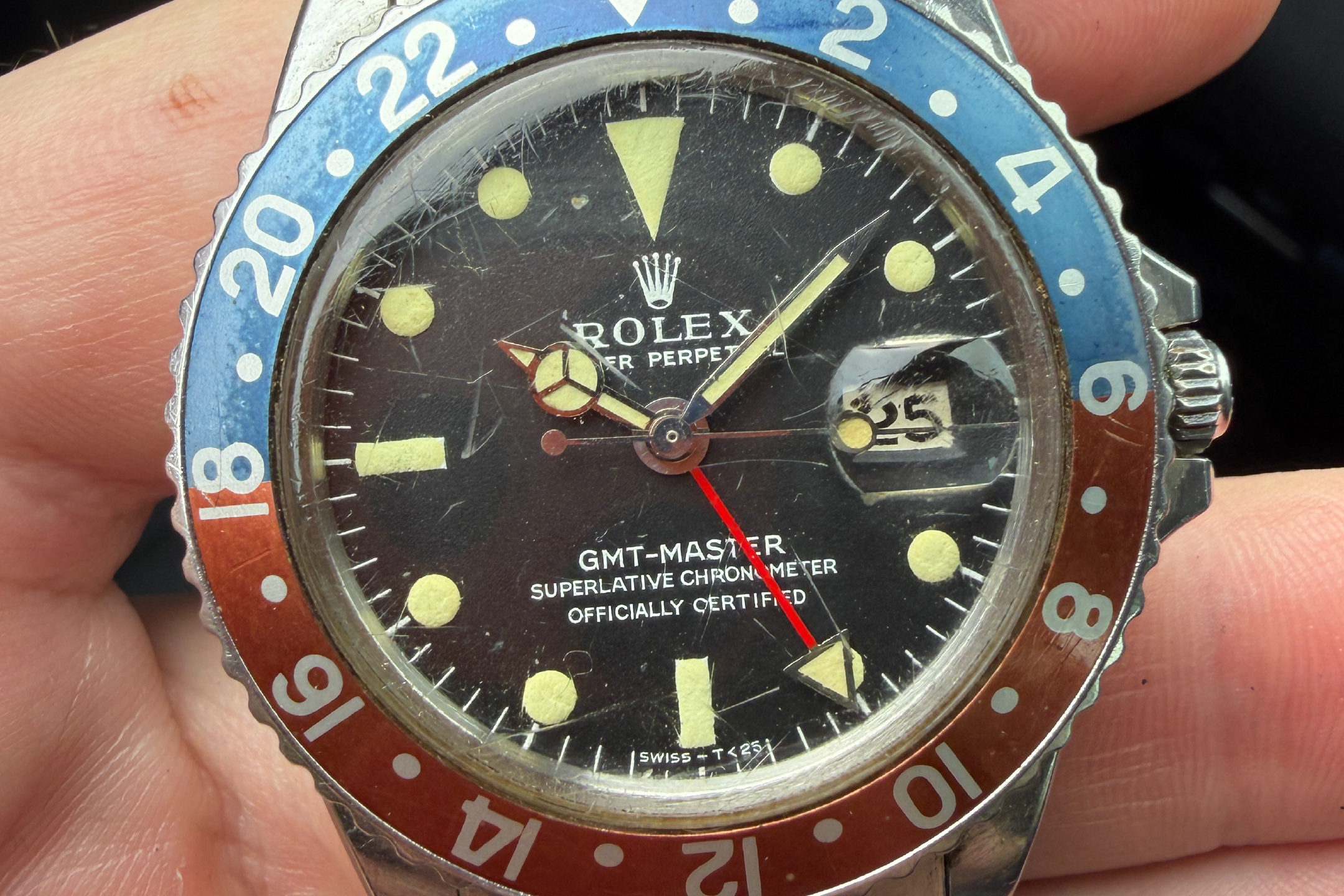
A recent transaction involving a vintage Rolex GMT-Master 1675 illustrates how quickly a watch can move when the right structure is in place. The story began with a simple message: “Rolex GMT Master 1968/9 (bought in NYC by me)”
There were no photos attached, which is often the case with the most interesting inquiries. The seller lived about fifteen minutes away, so I grabbed my loupe and drove over to take a look. When she opened the door she was wearing the watch.
Through the scratched acrylic crystal it was clear there was something special underneath. The case showed the kind of honest wear collectors hope to see. The lugs were still strong and well defined, suggesting the watch had never been polished. The bezel had faded beautifully from decades of exposure to sun and salt air. The red had softened into a rust tone and the blue had taken on the washed denim color often seen on GMTs that spent years at sea. Under the crystal sat a MK1 zinc sulfide dial with evenly aged luminous plots and matching hands.
As we spoke, the seller explained she had purchased the watch in New York in the late 1960s before joining the Italian Merchant Marine. The watch crossed the Atlantic with her between Genoa and Norfolk while she navigated using Greenwich Mean Time. More than fifty years later, the watch was still with her.
After discussing the watch and its history, the conversation turned to payment. She said a check would work, but admitted she felt uneasy accepting one from someone she had just met. I offered to show my ID so she could see exactly who she was dealing with.
That small moment shifted something.
Once an official identity document is attached to the person sitting across the table, uncertainty disappears and the tone of the transaction shifts. What initially felt cautious quickly became straightforward. The watch changed hands and the transaction was completed.
Shortly afterward, I sold the watch to another dealer on Collected. From the moment the original message appeared in my inbox to the moment the watch was on its way to a new home, roughly 90 minutes had passed.
Where Collected fits in
Deals like this happen every day in the watch market. Collected isn’t designed to replace that process. The human side of the transaction will always remain the same. What the platform does is structure everything around it.
A dealer can send a secure purchase or consignment link through Collected ahead of meeting someone. The seller can verify their identity and review the agreement, so both parties know exactly who they are dealing with. Once terms are agreed upon, a purchase or consignment agreement is generated automatically, giving the seller confidence that the transaction is documented and that there is a clear record of who they are doing business with.
After the watch is acquired, it can be pushed directly into inventory with the listing details ready to go. When the watch is sold, a new sale agreement is generated and the watch is transferred directly into the buyer’s Vault with the documentation attached. The entire lifecycle of the watch—from purchase, to sale, to ownership records—is documented automatically.
All with just a few clicks.